
Sinkhole in Your Yard in Orlando? What to Do First
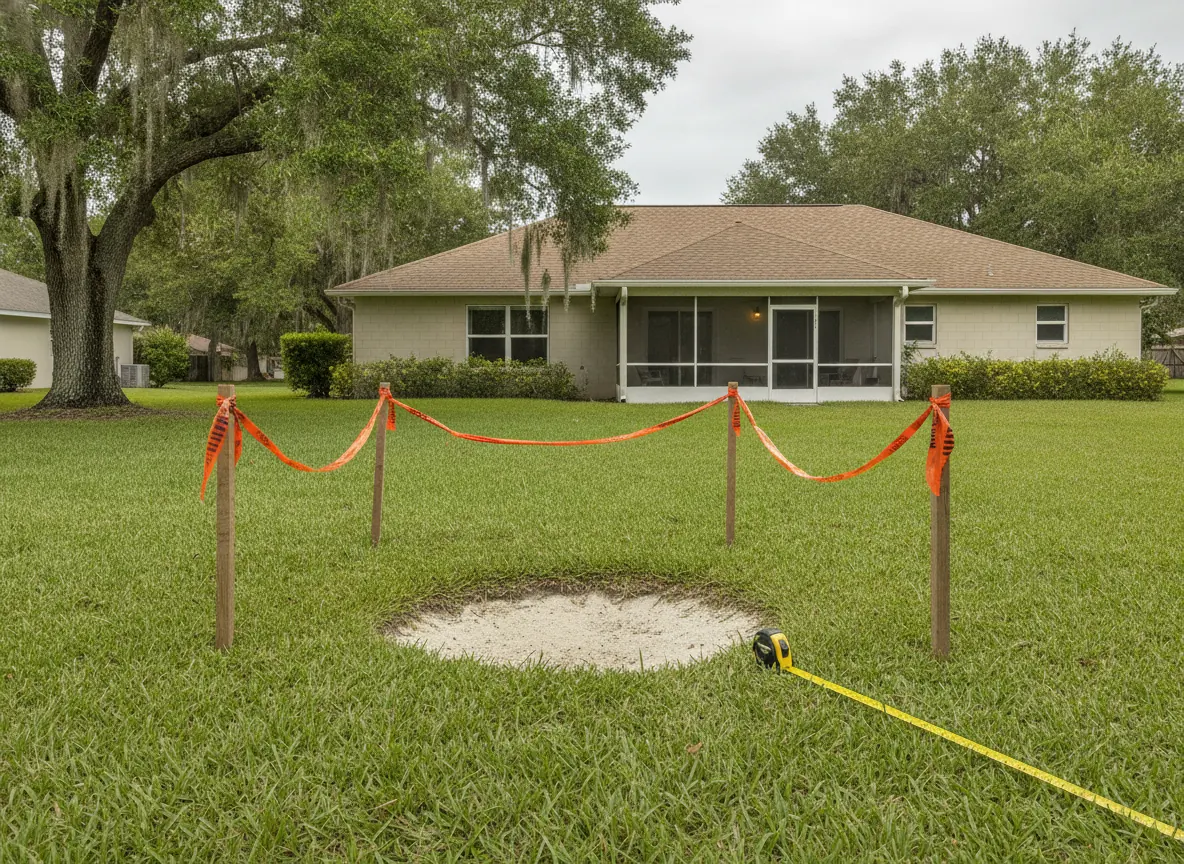
Found what looks like a sinkhole in your yard in Orlando? Do three things first: mark it and keep people and pets away, do not pour water into it, and photograph it with something for scale. Then check whether anything has changed inside the house. A depression in the lawn is often something ordinary, such as a broken drain line, buried debris or soil that was never compacted, and only a professional engineer or professional geologist can say whether it is sinkhole activity. No Florida agency inspects sinkholes for homeowners, so arranging that visit is up to you.
The first hour: mark it, keep water out, write it down
The Florida Geological Survey’s advice is short: “Mark and secure the hole” and “do not put water into the hole.” In practice:
- Ring it with stakes and tape, or lawn chairs, so nobody steps in after dark.
- Turn off the irrigation zone that sprays that patch of lawn.
- Take dated photos from the same spot, with a tape measure or broom handle for scale, so you can tell later whether it has grown.
- Note what is nearby: a downspout, an irrigation line, the sewer cleanout or a septic tank.
- Walk through the house. New cracks, doors or windows that stick, or a floor that feels out of level matter more than the hole itself.
What a yard sinkhole in the Orlando area usually turns out to be
The FGS is careful with its own records. When it explains why a reported depression often is not a true sinkhole, it lists “organic layers which compress as water is removed, collapsed or broken sewer and drain pipes or broken septic tanks, improperly compacted soil after excavation work, and even buried trash, logs and other debris.” Its database calls every entry a reported subsidence incident, because most are never field-checked.
Local records show the range of what homeowners report:
- Winter Springs, October 12, 2024: a front-yard depression about 5 by 3 feet.
- Pine Hills, July 8, 2019: “concrete patio sinking into subsidence.”
- Clermont, August 27, 2026: a hole about 2 feet across and 2 feet deep.
- East Orange County, late August 2026: a roughly 10-foot hole across front yards led to two precautionary evacuations; the cause had not been settled in the reports.
The ground underneath varies across the metro. A 1985 state map (FGS Map Series 110) places the center points of Pine Hills, Longwood, Winter Park, Altamonte Springs and Clermont in a zone of clayey cover where sinkholes are described as “most numerous, of varying size and develop abruptly,” and the center points of Orlando, Sanford, Winter Springs and Kissimmee in a sandy-cover zone where they are “few, shallow, of small diameter and develop gradually.” The map is regional and cannot speak to a single lot. Our Pine Hills and Longwood pages cover those areas in more detail.
A hole by the fence vs. a hole by the house
Two things change the picture: distance from the house and change over time. A dip near the back fence that stays the same size for weeks is a different situation from one at the slab edge, or one that grows after each storm. In Longwood on January 14, 2022, an FGS record describes a 17-foot-wide depression “against the north side of the structure,” and the Seminole County fire department evacuated the home. Records like that are uncommon, but they are why a depression next to the foundation deserves a professional look soon rather than after the next rainy season.
If the hole sits where roof water lands, the fix may be as simple as moving that water. The drainage and grading page covers downspouts, regrading and slab-edge washout.
Who can tell you whether it is a sinkhole
Diagnosing the cause is engineering under Florida chapter 471, and the FGS says home inspectors and insurance adjusters “are not trained nor qualified to determine if there is a sinkhole.” A professional engineer or professional geologist may use ground-penetrating radar, soil borings and, if the house is involved, a floor-elevation survey. The foundation and sinkhole inspection page compares a contractor’s free evaluation and quote, which is a sales estimate, with an engineer’s report. If the engineer finds sinkhole activity, the repair methods are explained on our sinkhole and subsidence repair page.
Yard sinkholes and insurance in Florida
Every Florida property insurer must cover catastrophic ground cover collapse, which requires an abrupt collapse, a visible depression, structural damage and the home being condemned and ordered vacated (§627.706). Broader “sinkhole loss” coverage is optional for an added premium, and notice of a sinkhole claim is barred after 2 years (§627.706(5)). Ask your insurer what your policy covers. Our plain-English guide to the sinkhole statutes goes further. This is general information, not legal or insurance advice.
Next step
Once you know the cause, the repair follows from it: a drain or plumbing fix, regrading, slab lifting near the edge, or grouting when an engineer finds sinkhole activity. Orlando FL Foundation Repair connects Orlando-area homeowners with independent Florida-licensed contractors for free, no-obligation foundation repair quotes. The contractor you choose quotes, contracts and does the work. Request free quotes when you are ready.
Frequently asked questions
Should I fill a sinkhole in my yard myself?
The Florida Geological Survey’s first advice is to mark and secure the hole and not to put water into it. Photograph and measure it first, and keep sprinklers off that area. Whether and how to fill it depends on the cause, which a professional engineer or professional geologist determines; a depression from a broken pipe needs a different fix than soil raveling into limestone.
Does anyone in Florida inspect yard sinkholes for free?
No. The Florida Geological Survey says there is no agency with responsibility or authority for sinkhole inspections in Florida. It keeps a database of voluntary subsidence reports and runs a Sinkhole Helpline for general questions, but a property-level answer comes from a professional engineer or geologist you or your insurer hires.
Is a hole in the yard covered by homeowners insurance?
It depends on the policy. Every Florida property insurer must cover catastrophic ground cover collapse, which requires an abrupt collapse, a visible depression, structural damage and the home being condemned and ordered vacated. Broader sinkhole loss coverage is optional for an added premium. Ask your insurer what your policy covers. This is general information, not legal or insurance advice.