Foundation Crack & Block Wall Repair in Orlando, FL

Cracked tile, stucco cracks from window corners or a stair-step crack in a block wall? Here is how to tell which cracks matter, how they are monitored and repaired, and how to compare free quotes.

Get a Free Quote Call (727) 300-6656
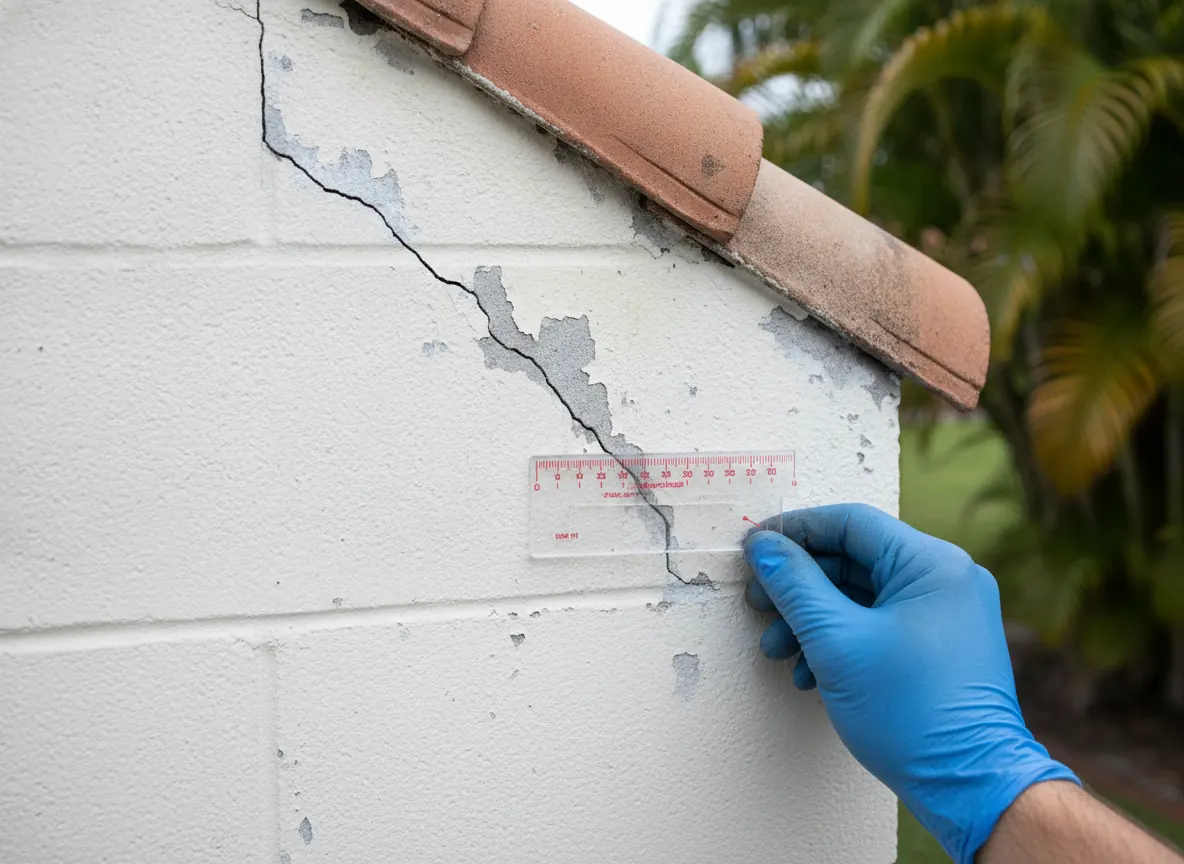
Crack gauge over a stair-step crack in a concrete block wall

Which foundation cracks matter

Almost every concrete slab cracks. Concrete shrinks as it cures, and thin, hairline cracks that stay the same width for years are usually a cosmetic issue. The cracks worth a closer look are the ones that change: cracks that widen, cracks where one side sits higher than the other, cracks that reopen after being patched, and cracks that show up together with sticking doors, sloping floors or gaps at baseboards.

In Central Florida the soil under most homes is sand with negligible shrink-swell (USDA NRCS), so moving cracks usually trace back to settlement: compressing organic muck, poorly compacted fill, or soil washed out from the slab edge. Less often, testing finds raveling sand above limestone. The crack itself does not tell you which; a diagnosis does.

Slab cracks, stair-step cracks and stem walls

Slab cracks

Cracks through the slab often show first as cracked floor tile or a ridge under carpet. Width, offset and whether the crack runs toward an exterior wall that is also cracking help separate shrinkage from settlement. See slab foundation repair.

Stair-step cracks in block walls

On homes with concrete block (CMU) exterior walls finished in stucco, when one corner settles the block often cracks along its mortar joints in a stair-step pattern, and the stucco over it cracks diagonally from window and door corners.

Stem walls

On homes built on a raised block stem wall with a slab inside, cracks in the stem wall or a gap between it and the slab can point to settlement at the footing below. These are structural components, so repair goes through the license and permit rules below.

Crack monitoring before repair

A one-time look can't show whether a crack is still moving. Monitoring can.

  • Photograph each crack with a ruler or coin for scale and note the date
  • Mark the ends of the crack in pencil so you can see if it grows
  • Ask about a crack gauge, a small plastic monitor fixed across the crack that shows movement in fractions of an inch
  • Check again after heavy rain and again in the dry season; about 57 percent of Orlando's normal yearly rain falls June through September (NOAA 1991–2020 normals, Orlando International Airport)

Readings over a few months give a contractor or engineer far more to go on than a single visit, and they help you compare quotes that recommend very different repairs.

Injection and reinforcement, in general

Epoxy injection fills a cleaned crack with a structural adhesive that bonds the two sides back together. It is used where a crack is stable and the goal is to restore the concrete's continuity.

Polyurethane injection fills a crack with a flexible foam or resin that seals out water and insects and tolerates small movement. It seals; it does not add strength.

Reinforcement covers carbon fiber strips bonded across cracked block or concrete, and engineer-specified repairs to block walls such as rebuilding cracked courses. Reinforcement holds a wall together but does not stop the settlement that cracked it.

If cracks are moving, sealing or reinforcing them alone tends to be temporary. The underlying settlement is addressed with foam lifting, piers or, where testing calls for it, grouting; see house leveling and piers and sinkhole and subsidence repair.

Typical national ranges from This Old House (2026), Bob Vila, HomeGuide (2026) and Angi (2026) — estimates, not quotes.
ItemTypical range
Crack repair, per crack$250–$800
Stabilization / wall reinforcement$4,000–$12,000
Structural engineer's reportabout $340–$1,000 (up to $3,000 for complex cases)

See the cost guide for more line items.

When a PE is needed

Deciding whether a crack is structural, and why it formed, is engineering under Florida's chapter 471, which only a Florida-licensed professional engineer (PE) may do. A contractor may install a PE-designed repair (§471.003(2)(f)), and a contractor's free evaluation is a sales estimate, not an engineering opinion. A PE is worth calling when cracks are widening or offset, when several signs show up together, before buying a home with visible cracking, or when two quotes disagree about the cause. The inspection and engineer report page explains what a report covers.

Cracking and insurance come up often. Under §627.706(2)(a), "settling or cracking of a foundation" alone is not a catastrophic ground cover collapse. Ask your insurer what your policy covers. This is general information, not legal or insurance advice.

In Florida, structural foundation repair, underpinning and sinkhole stabilization of a house is Division I contracting: a certified or registered general contractor (CGC/RGC) or residential contractor (CRC/RRC) clearly qualifies, and a building contractor (CBC) arguably does for homes up to three stories (Fla. Stat. §489.105(3)(a)–(c)); Florida has no separate foundation or underpinning specialty license. A contractor's license number must appear in its ads and contracts (§489.119(5)(b)); check it on MyFloridaLicense.com, and remember that a county business tax receipt is not a license. The handyman exemption (under $2,500) does not fit foundation work.

Permits: Orange County says structural repairs to foundations need a permit, construction plans are required in most cases, and plans must be signed and sealed by a Florida PE or registered architect when repairs affect structural stability; a Notice of Commencement is required when work exceeds $5,000 (Orange County permit pages). In Seminole, Osceola and Lake counties and the cities, permit rules vary; the licensed contractor confirms and pulls any permit.

We connect Orlando-area homeowners with independent Florida-licensed contractors for free, no-obligation foundation repair quotes. The contractor you choose quotes, contracts and does the work. Send photos and a description through the free quote form; we usually reply the same day.

Foundation Crack & Block Wall Repair FAQ

Are hairline cracks in a slab normal?

Usually. Concrete shrinks as it cures, and thin hairline cracks that stay the same width are common and mostly cosmetic. Cracks worth having evaluated are those that widen, show one side higher than the other, reopen after patching, or appear alongside sticking doors and sloping floors. Photographing and marking a crack over a few months shows whether it is moving.

What causes stair-step cracks in a block wall?

Stair-step cracks follow the mortar joints of a concrete block wall and usually mean one part of the wall has moved relative to another, often from settlement at that corner of the house. In Central Florida, where soils are mostly sand, causes include compressing organic soil, poorly compacted fill and slab-edge washout. A Florida PE can determine the cause at a specific home.

Is epoxy or polyurethane better for crack repair?

They do different jobs. Epoxy bonds a stable crack back together and restores continuity; polyurethane seals out water and insects and tolerates small movement but adds no strength. Neither stops settlement. National guides put crack repair at $250–$800 per crack. If a crack is still moving, the cause usually needs addressing first.

Does foundation cracking count as a sinkhole loss?

Florida's statute says damage consisting merely of the settling or cracking of a foundation does not constitute a catastrophic ground cover collapse (§627.706(2)(a)). Whether broader sinkhole loss coverage applies depends on the policy and on testing by an engineer or geologist. Ask your insurer what your policy covers. This is general information, not legal or insurance advice.

When should I call an engineer about a foundation crack?

Consider a Florida-licensed professional engineer when cracks widen or offset, when several signs appear together, before buying a home with visible cracking, or when contractors disagree about the cause. Diagnosing a crack is engineering under chapter 471. Engineer's reports run about $340–$1,000 in national guides, up to $3,000 for complex cases.

Cracked slab, sticking doors or a new depression in the yard? Get a clear quote.

Free, no-pressure quotes across Orlando, Winter Park, Kissimmee, Sanford, Altamonte Springs and Central Florida.

Call NowFree Quote