
Does Orlando Have Sinkholes? What the Records Show
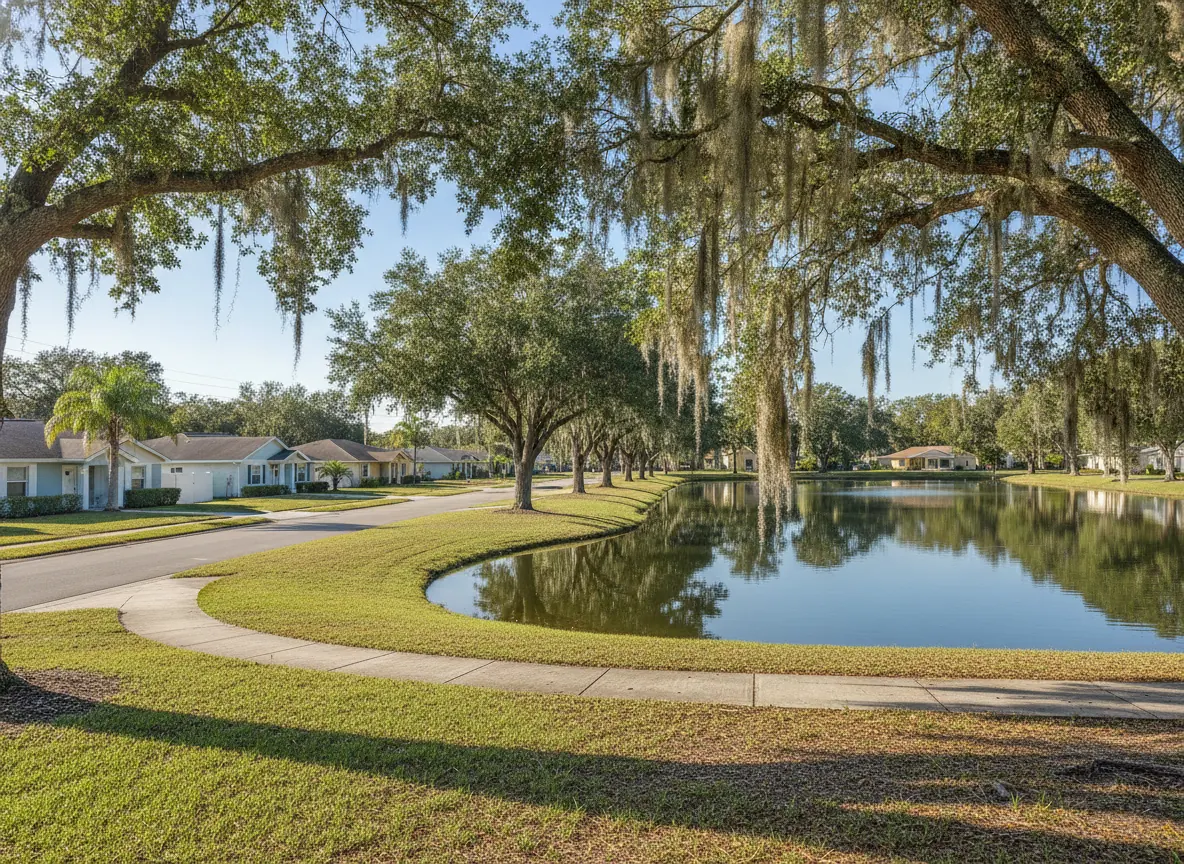
Yes, Orlando has sinkholes, but the records show they are less common here than many people assume. As of October 19, 2026, the Florida Geological Survey (FGS) listed 232 reported subsidence incidents in Orange County, 172 in Seminole, 178 in Lake and 16 in Osceola, out of 4,457 statewide, and most of them were never field-checked. In insurance data from 2006 to 2009, Orange County accounted for 2.2 percent of Florida’s sinkhole claims, while Hernando, Pasco and Hillsborough counties together accounted for over 66 percent (Florida Senate Interim Report 2011-104).
Below is what those records say about the Orlando area county by county and town by town, the dated local events people still talk about, and what it all means for a house with a new crack.
Orlando-area sinkholes by county
The FGS database is a list of voluntary reports, not confirmed sinkholes. In its own words, “the majority of the incidents have not been field-checked and the cause of subsidence is not verified,” which is why each entry is called a reported subsidence incident.
| County | All reports | Reports since 2015 | Busiest decade |
|---|---|---|---|
| Orange | 232 | 30 | 1980s |
| Seminole | 172 | 36 | 1980s |
| Lake | 178 | 56 | 2000s |
| Osceola | 16 | 6 | 2020s |
Two things stand out. Lake County has logged the most reports of the four since 2015, with Groveland, Clermont, Leesburg, Eustis and Sorrento coming up again and again. Osceola, home to Kissimmee and St. Cloud, has very few reports at all. Florida Senate staff, citing FGS geologists, named Orange and parts of Lake and Seminole as counties with shallow limestone “overlain by sands with various mixtures of clay”; Osceola was not on that list.
Which Orlando-area towns have the most sinkhole reports
Matching FGS report locations to Census city boundaries gives rough counts inside each place: Pine Hills about 32, Longwood 23, Maitland 23, the City of Orlando 19, Clermont 15, Altamonte Springs 14, Winter Park 11, Casselberry 11, Lake Mary 11, Sanford 7, Winter Springs 4 and Kissimmee 1. Treat these as approximate. Many older records are located only to a survey section, so a point can land in the wrong town.
Local reporting has noted that most Seminole County reports sit along I-4 and US 17-92, which fits the Longwood, Altamonte Springs, Casselberry and Maitland numbers. Our Longwood, Altamonte Springs and Clermont pages look at each of those markets in more detail.
Notable Central Florida sinkholes, with dates
- Winter Park, May 8, 1981. The U.S. Geological Survey describes a sinkhole about 300 feet across with a visible depth of about 80 feet near South Denning Drive and West Fairbanks Avenue. In the FGS records, 1981 has more reports across Orange, Seminole and Lake than any other year (38). See our Winter Park page.
- Near Clermont, August 2013. A sinkhole under the Summer Bay resort on the US 192 corridor, south of Clermont city limits, damaged a villa building after guests were evacuated. No one was hurt.
- Altamonte Springs, 2015 and 2019. Two condominium complexes had units evacuated. In 2019 residents were allowed back in early November after engineers hired by the insurer found no structural damage.
- Maitland, May 2026. A sinkhole under North Wymore Road near I-4 grew to about 45 by 40 feet. Officials said it was not threatening homes, geotechnical consultants later found it stable, and the road reopened around July 2.
Big events like these are rare and widely reported. Most entries in the database describe small depressions in yards, patios and roadsides.
Why sinkhole reports rise after droughts and heavy rain
The FGS says “sinkhole activity is greatest when there have been drought conditions for some period of time,” and lists drought, heavy rainfall and heavy groundwater pumping among the triggers. Central Florida gets both extremes. After Hurricane Ian dropped 13.2 inches at Orlando International Airport on September 28–29, 2022 (National Hurricane Center), the FGS logged 8 reports in the four counties through the end of November. After Hurricane Milton brought 14.83 inches to a cooperative weather site near Orlando in October 2024, it logged 9 more by year end.
2026 has gone the other way, with one of the driest starts on record. After the Maitland sinkhole, UCF civil engineering professor Dr. Manoj Chopra told Spectrum News 13 that “it can be due to both excessive rainfall or drought conditions like what we’re currently seeing.” Our post on the best time of year for foundation repair in Orlando covers how the rainy season affects scheduling.
What the sinkhole record means for an Orlando house
For most homes with a new crack, the answer is ordinary settlement, not a sinkhole. Orlando-area soils are mostly sands with negligible shrink-swell (NRCS SSURGO), and the usual settlement causes are slab-edge washout, poorly compacted fill and pockets of organic muck. The FGS itself lists look-alikes such as decomposing organic debris, broken pipes and improperly compacted soil. Our guide to settlement vs sinkhole in Central Florida explains how to tell them apart.
Only a Florida-licensed professional engineer or professional geologist can say whether a house has sinkhole activity. The FGS states plainly that “there is no agency with responsibility or authority for sinkhole inspections in Florida.” The foundation and sinkhole inspection page compares a contractor’s free evaluation and quote with an engineer’s report, and the sinkhole and subsidence repair page covers the grouting and underpinning work that follows when an engineer finds sinkhole activity.
On insurance, every Florida property insurer must cover catastrophic ground cover collapse, which requires an abrupt collapse, a visible depression, structural damage and the home being condemned and ordered vacated; “settling or cracking of a foundation” alone does not qualify (§627.706(2)(a)). Broader sinkhole loss coverage is optional for an added premium. Ask your insurer what your policy covers. This is general information, not legal or insurance advice.
If you are seeing cracks, sticking doors or a floor that has dropped, Orlando FL Foundation Repair connects Orlando-area homeowners with independent Florida-licensed contractors for free, no-obligation foundation repair quotes. The contractor you choose quotes, contracts and does the work. Request free quotes to compare written proposals.
Frequently asked questions
Is Orlando a high-risk area for sinkholes?
Sinkholes do occur here, but less often than in the Tampa Bay counties. Orange County had 2.2 percent of Florida’s 2006–2009 sinkhole claims, while Hernando, Pasco and Hillsborough had over 66 percent (Florida Senate Interim Report 2011-104). State geologists do say Orange and parts of Lake and Seminole share a similar geologic setting of shallow limestone under sands with clay.
Which Orlando-area towns have the most sinkhole reports?
Matching Florida Geological Survey reports to city boundaries gives rough counts of about 32 in Pine Hills, 23 each in Longwood and Maitland, 19 in the City of Orlando, 15 in Clermont and 14 in Altamonte Springs, against 1 in Kissimmee. These are voluntary, mostly unverified reports, and older ones are located only approximately.
Who can confirm whether a depression near my house is a sinkhole?
A Florida-licensed professional engineer or professional geologist. The Florida Geological Survey says no state agency inspects sinkholes for homeowners, and that home inspectors and insurance adjusters are not qualified to determine if there is a sinkhole. The engineer may use a floor-elevation survey, ground-penetrating radar and soil borings to find the cause.